Lego-inspired visible repairs
Colour block darns and an ingenious use of the humble ‘brick’

I don’t remember ever playing with Lego when I was a child. My ‘toy box’ was packed with Care Bears, My Little Pony kit, dressing up gear, and later my netball and trusty Gameboy. It wasn’t until I had kids of my own that I was able to truly appreciate the wonder of a few small, colourful, plastic bricks.
That said, although my sons are very fond of Lego, they are fair-weather builders. If they get a new (usually second-hand) set or if inspiration strikes to create a shopping centre or Gladiator arena, they’ll get their bricks out. But it’s not a daily occurrance. Nowadays it’s me who reveres the humble Lego brick more than anyone else in our house.
Last year I trained as a facilitator of the Lego Serious Play (LSP) Method, a tool developed over 20 years ago by Lego to help with their strategy. In brief – because The Mending Kit is about repair, not Lego – LSP is a wonderful way to have different conversations with different results. The method uses metaphor and storytelling to build shared understanding and develop strategies (and much more) within teams, families, community groups, classes and one-to-one. In a workshop we ‘think with our hands’ and although sessions follow a certain process, just like the Lego brick itself, there are hundreds of ways to use LSP.
To date, I’ve collaborated on workshops with activists, campaigners, creatives, engineers and academics, exploring regenerative business, collective action, communications, sustainability and the future. Although LSP was developed for adults, it can work well for children too if they have a decent grasp of metaphor. My kids love the process and we’ve had some great chats following their builds.
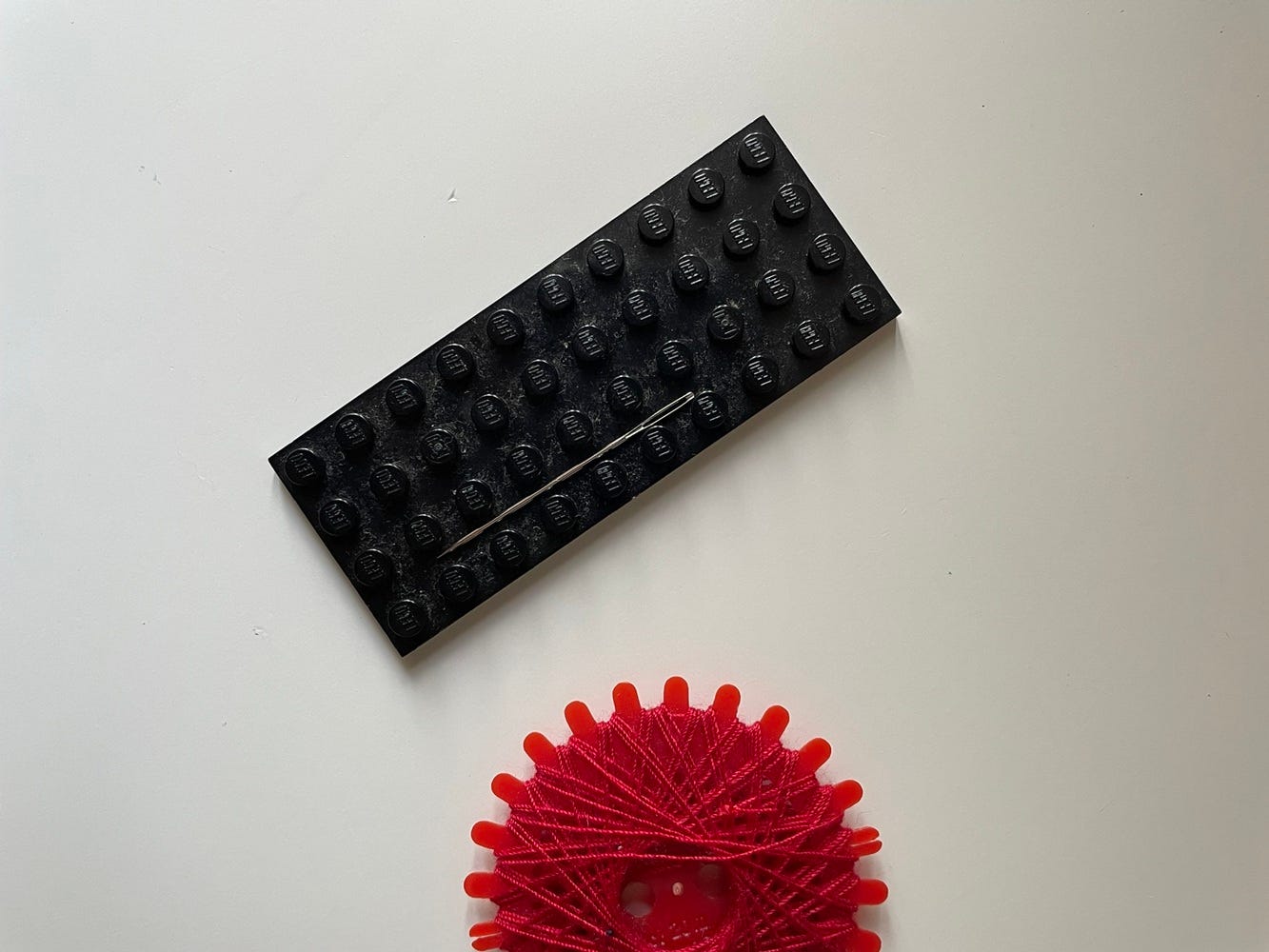
Back to clothing repair. A few months ago, when my eldest son and I were mending – he was unwell and struggling to juggle the mending kit on a duvet - I could see a needle was about to go astray and looked around for something he could use to contain it. That’s when I spotted it on my desk. A Lego brick. Perfect. I’m never far away from my bag of Lego, or my mending kit.
(I didn’t know before my training but among us Lego geeks, when we say ‘brick’ we mean piece of Lego, whether square, round, rectangular or rabbit shaped.)
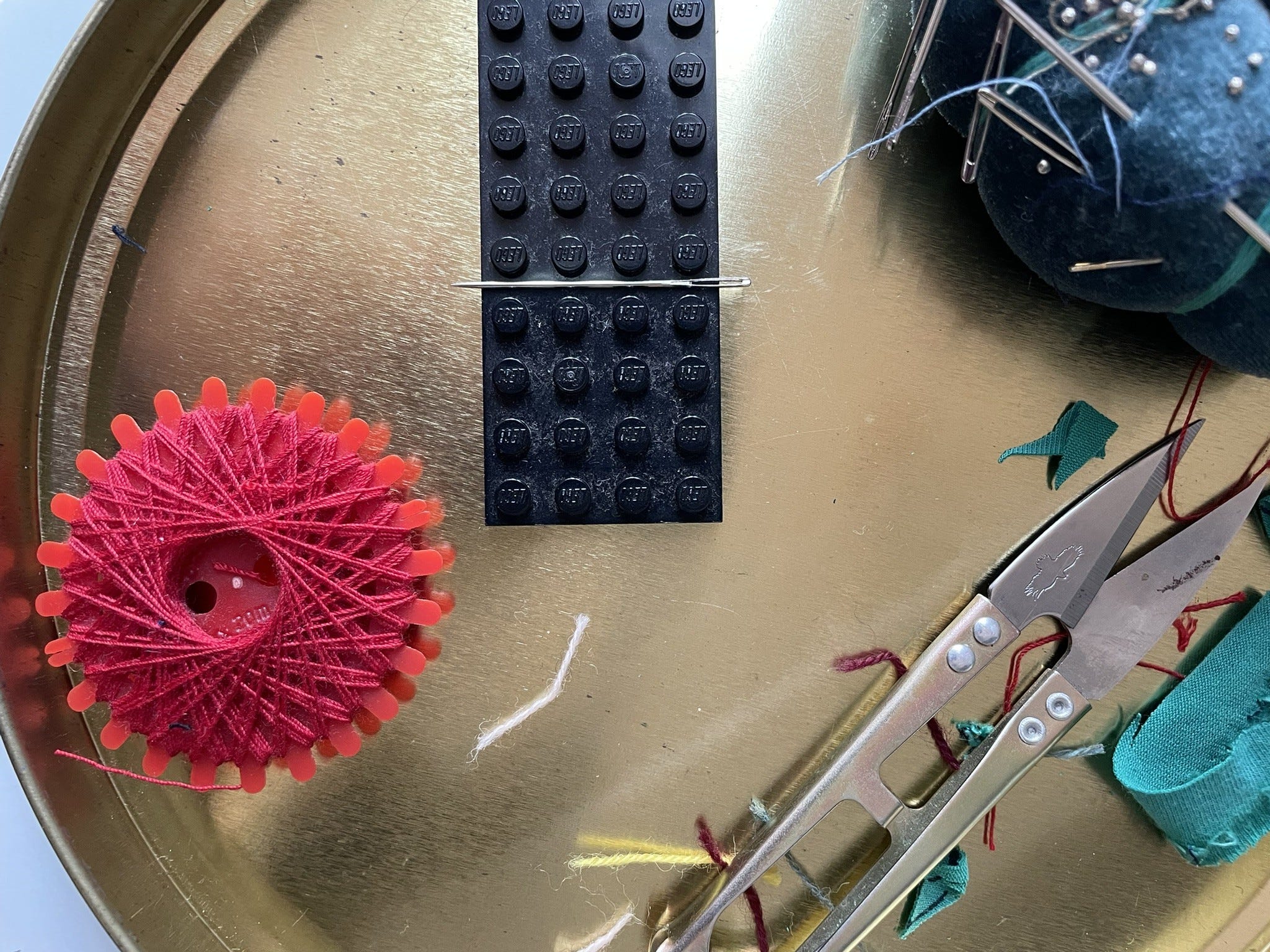
I popped the needle onto this bit of black Lego and it did a fine job of keeping it out of trouble. I tend to use a pin cushion for my needles but there are so many skewered into it that I often lose track of which one I’m working with that day. Having a flat Lego brick to hand is a helpful way of keeping your primary needle safe and in sight.
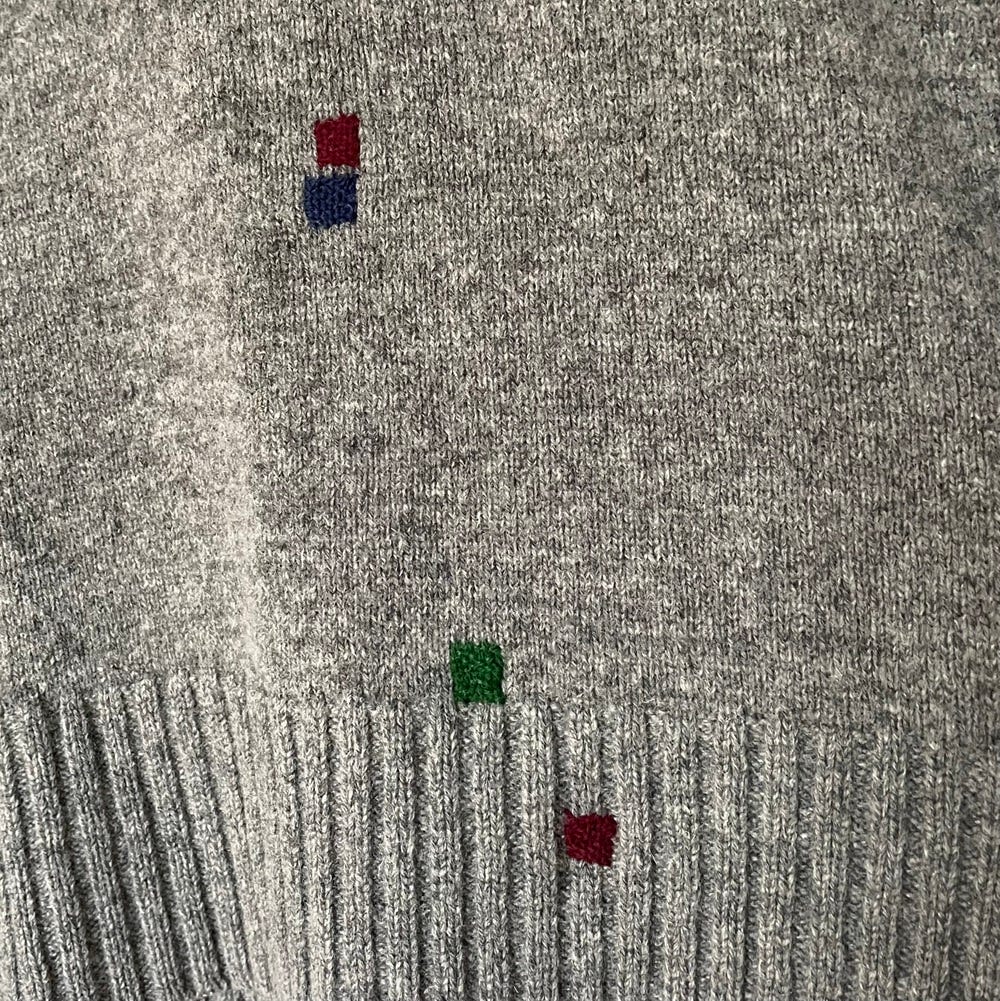
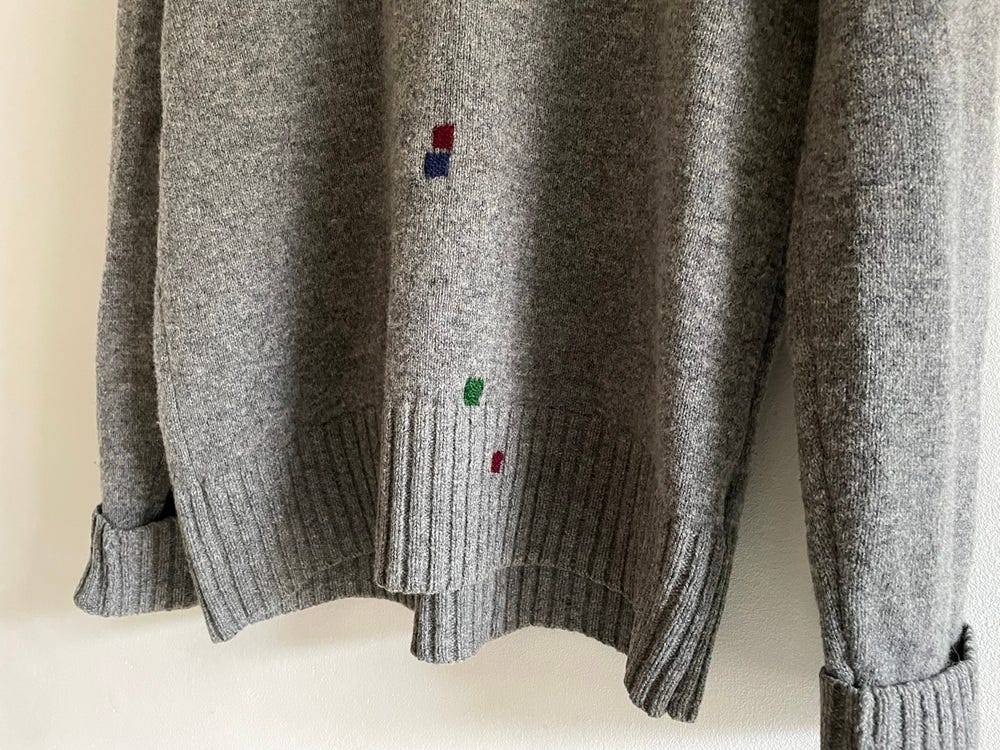
Today’s repairs are some bright, brick-like darns on one of my husband’s jumpers. I gave him the options of an invisible repair or something brighter and he opted for colour. Definitely the right choice as this grey lambswool Gap knit needed brightening up!
There were a couple of tiny holes that I did darn in grey (in a stocking darn on that reverse) as it was quicker to do. For the other holes I opted for a palette of three colours that I used to darn patches on the surface of the jumper.


My mending kit for this repair:
Darning needle
Snips
Darning yarn in navy blue, maroon and green
Darning mushroom (optional)


Here’s how I did this repair:
I used the same process for each of the surface patched darns
First, I created a vertical warp using darning yarn
Next, I wove the weft horizontally, over and under every other warp yarn
I made a stitch at the end of each row to secure the yarn on each edge of the patch
Finally, I secured the ends of the yarn on the reverse of the jumper. I did this by weaving them into the back of the knit around the hole. This also helps to prevent the hole getting any bigger.
What’s coming up this week:
My mending pile: one of the knees is going on a trusty pair of jeans so I need to get patching!
Next week on The Mending Kit: A darn on a charity shop-bought cashmere jumper, damaged at a gig!
Want to read some more of my posts about darning? You can find them here: Darns from The Mending Kit.
Thank you for reading The Mending Kit. If you’re enjoying it, please do share it, ‘like’ it, subscribe, or leave a comment below. It really means a lot to get feedback!